EPC contractor and metering systems specialistinfo@skpalayesh.ir+98 21 8770 0043
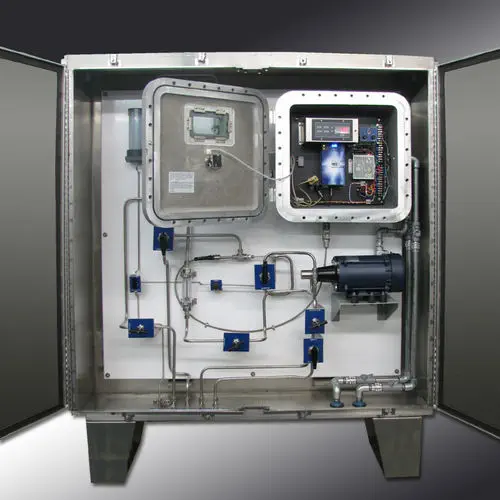
Analyzer panel with an explosion-proof enclosure and sample conditioning tubing

Technical capability

Analyzer Systems

Engineering, procurement, integration, testing and commissioning of analyzer packages and sampling systems for gas and liquid process quality monitoring.

What does SKP do in analyzers?

Sanat Khat va Palayesh (SKP) engineers, supplies, integrates, tests, installs and commissions analyzer system packages and sampling systems. An analyzer package is not just an instrument: the sample take-off, the sample transport and conditioning, the enclosure or analyzer house, the utilities, the calibration arrangement and the data path all have to work as one assembly before the reading means anything.

SKP's current reference work in this field is the supply and commissioning of the analyzer system packages for Ilam Gas Refinery, alongside the sampling and quality monitoring systems that form part of the company's measurement packages.

Technical scope

The systems SKP delivers

01

Analyzer system packages

A complete analyzer assembly built, tested, shipped and commissioned as one unit, rather than loose equipment assembled for the first time on site.

  • Package-level engineering and integration
  • Electrical, signal and utility interfaces
  • Functional testing of the package before shipment
  • Installation, commissioning and handover to the operator
02

Sampling and sample conditioning

The part of the system that decides whether the answer is right: the sample has to represent the main stream and reach the analyzer in a measurable condition.

  • In-line sample probes
  • Sample transport lines and lag time control
  • Sample conditioning — pressure, temperature and filtration
  • Drain, vent and sample return arrangements
03

Gas and liquid quality monitoring

Measurement of fluid composition and quality properties, in process applications and alongside fiscal measurement systems.

  • Process gas and liquid analyzers
  • Quality monitoring at the interface with a metering system
  • Continuous emission monitoring systems (CEMS)
  • Quality data transfer to control and reporting systems
04

Analyzer houses, shelters and panels

The controlled environment in which an analyzer reaches its stated accuracy and can be maintained safely.

  • Analyzer houses and shelters with environmental control
  • Analyzer panels and cabinets
  • Lighting, ventilation, gas detection and safety provisions
  • Access layout for maintenance and calibration
05

Calibration, testing and integration

Demonstrating that the system measures what it claims to, and that the claim can be repeated in service.

  • Calibration cylinders and calibration gas routing
  • Testing against the approved inspection and test plan
  • Loop checking and site acceptance testing after installation
  • Commissioning, operator training and documentation

Inside the package

Inside an analyzer house

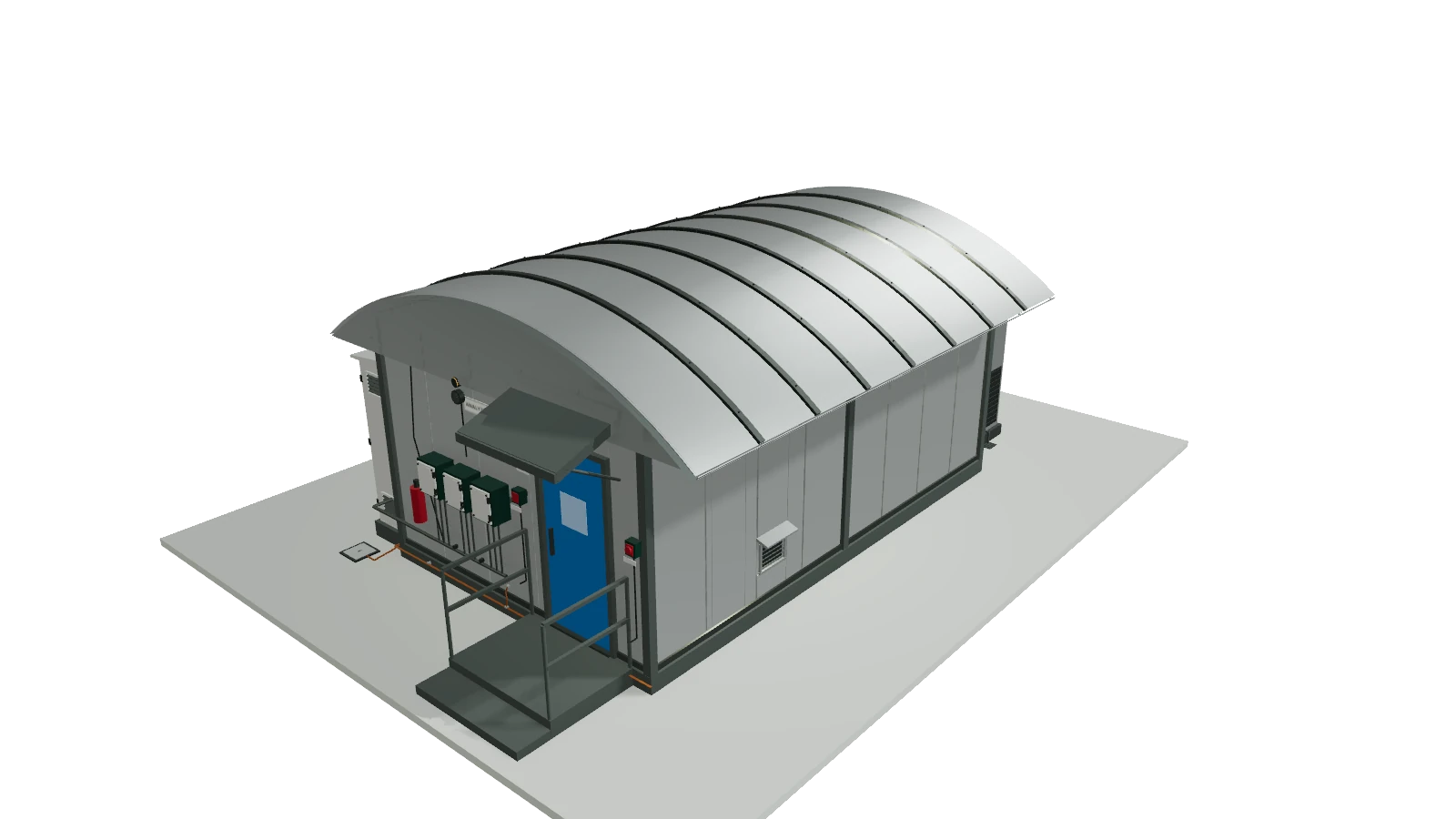
This interactive 3D model of an analyzer house can be rotated and inspected. A metering skid settles how much gas changed hands; the analyzer house beside it settles what that gas was. Step inside to see what SKP puts in one — the chromatographs, the dew-point analyzers, the sample conditioning that feeds them and the cabinets that carry their signals — and watch how each measurement is actually made.

Equipment

Interactive 3D model of a gas analyzer house seen from the door side

Click the house, or choose Inside, to open it up. The two air-conditioning units keep the analyzers at the temperature they were calibrated at; the cylinder cabinet behind the analyzer wall holds the calibration and carrier gases, piped straight through the wall to the chromatographs.

Illustrative model of a typical analyzer house. The readings shown are representative figures for pipeline-quality natural gas, not measurements from any project.

How each analyzer works, step by step

The same four studies as the animation, in text: what each analyzer in a natural-gas analyzer house measures and how the measurement is made.

How does a gas chromatograph measure natural gas composition and heating value?

Read the steps
  1. Sample loop. Conditioned gas runs continuously through a fixed-volume loop, so a fresh, representative sample is always waiting at known pressure and temperature.
  2. Injection. A diaphragm valve changes over and helium carrier sweeps the trapped loop onto the columns. The cycle is timed and takes about five minutes.
  3. Separation. Packed columns at constant temperature let the light components through first and hold the heavier ones back, so the mixture arrives as a sequence. A timed backflush returns the heaviest ends as one hexanes-plus peak.
  4. Detection. A thermal-conductivity detector sees each peak. Peak area gives mole fraction, and from the composition come heating value, Wobbe index and relative density.

How does a sulphur chromatograph measure H₂S and total sulphur in natural gas?

Read the steps
  1. Sample loop. The same principle, but the whole sample path is inert and sulphur-passivated: sulphur compounds are reactive at ppm level and would be lost before they were measured.
  2. Injection. The loop is injected onto a column chosen to resolve hydrogen sulphide, carbonyl sulphide and the mercaptans from the bulk hydrocarbons.
  3. Separation. The sulphur species elute one after another while the hydrocarbon matrix passes largely unseen by the detector.
  4. Flame photometric detection. Each compound burns in a hydrogen-rich flame and excited sulphur emits violet-blue light to a photomultiplier. H₂S and carbonyl sulphide arrive separately, the mercaptans as one backflushed group, and the three sum to total sulphur.

How does a chilled-mirror analyzer measure hydrocarbon dew point?

Read the steps
  1. Purge and shut-in. Gas is filtered in three stages and swept through the cell at the measuring pressure. The outlet solenoid then closes: the cell stays at line pressure, but the sample in it is held still.
  2. Cooling. Thermoelectric coolers drive the mirror down — five degrees a minute, then two once it is within fifteen of the last dew point — read by a platinum resistor inside the mirror itself.
  3. Dew point. One cover, two surfaces: rough black and polished. Condensing hydrocarbons spread across the rough one and the returning light rises; water beads on the polished one, which is how the two are told apart. The mirror temperature at that instant is the dew point.
  4. Warming. The coolers reverse until the film has gone, the solenoid reopens and flow resumes. Nothing is consumed. A cycle takes twenty to thirty minutes and holds the dew point to about a degree.

Modelled on the AMETEK 241CE II from its operator's guide and data sheet. The measuring cell is bolted outside the flameproof enclosure, so the sample never enters it. Sizes the manufacturer does not publish are estimated.

How does a laser analyzer measure moisture and water dew point in natural gas?

Read the steps
  1. Sample in. No conditioning train to speak of: particulate filtering and a liquid separator, then one to two litres a minute past a cell held in a heated oven so nothing drops out of the gas phase.
  2. The laser. One temperature-controlled diode laser, fibre-coupled and split two ways: a sealed reference cell on one leg, a GRIN lens into the sample cell on the other. Neither the laser nor the detector touches the gas.
  3. Absorption. The beam runs the cell, reflects off a gold mirror and returns to an InGaAs detector. Swept across one water line, where methane does not absorb, the bite taken out of the light is the moisture.
  4. Line-lock and result. The reference cell holds the laser on the line and verifies the reading continuously, so there is no calibration gas and no routine calibration. ppmV and a water dew point go to the display, to 4–20 mA and to Modbus.

Modelled on the AMETEK 5100HD from its data sheet and manual: a fibre-coupled diode laser splits into a sealed reference cell that keeps the reading locked and a heated sample cell. Sizes the manufacturer does not publish are estimated.

Reference projects

SKP analyzer projects

The projects below are SKP's documented experience in analyzer systems and packages.

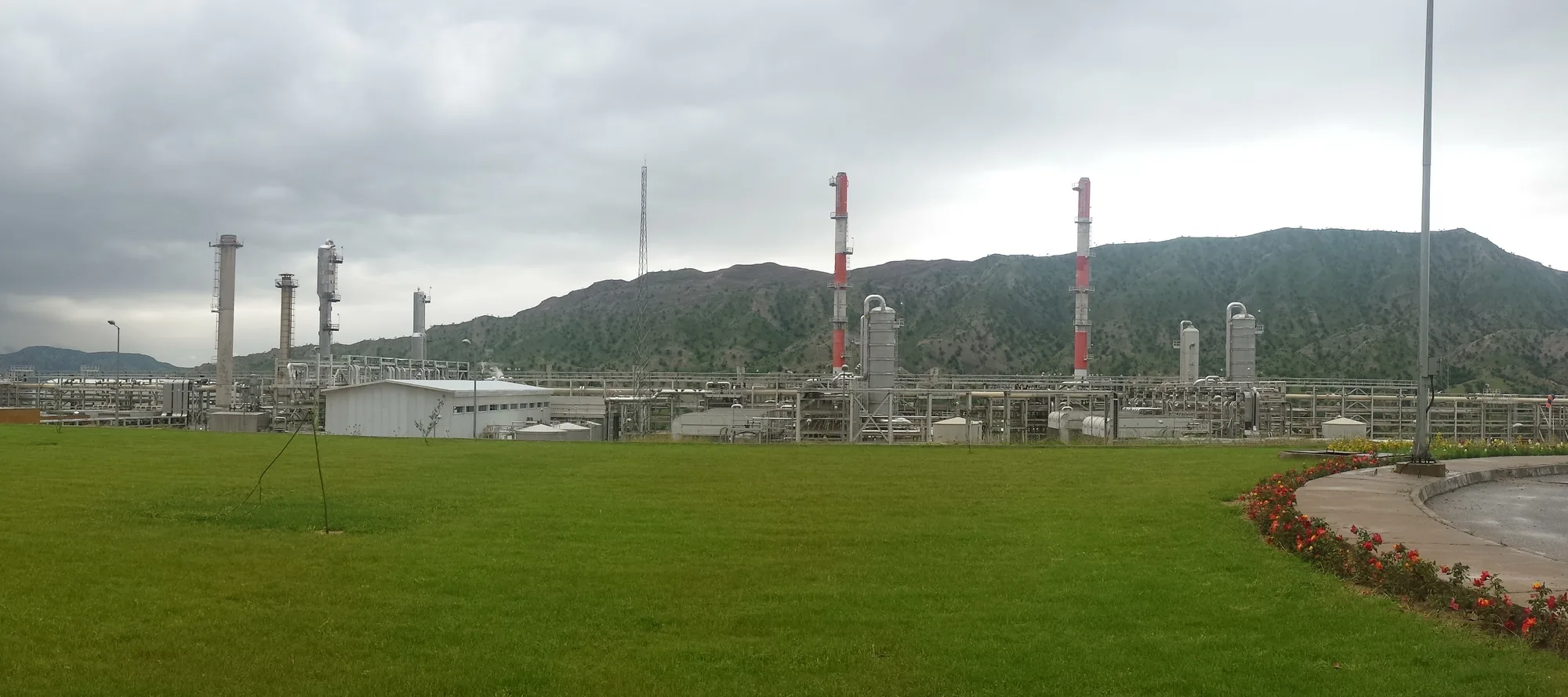
Process units and stacks at Ilam Gas Refinery, below the hills of Ilam Province
Analyzer2025

Ilam Gas Refinery — Analyzer Systems

Analyzer system packages for Ilam Gas Refinery in western Iran — the only analyzer scope in the national refinery measurement programme. SKP engineers, integrates, tests, installs and commissions the packages.

Read More

Frequently asked questions

Does SKP provide analyzer packages?
Yes. SKP supplies, engineers and integrates analyzer system packages, and tests, installs and commissions them against the client-approved inspection and test plan.
What is the difference between an analyzer and an analyzer system?
The analyzer (or analyser) is the measuring instrument. The analyzer system also covers the sample take-off and transport, the sample conditioning, the enclosure or house, the utilities, the calibration arrangement and the data path. In practice, accuracy is usually decided by those surrounding parts.
What services does SKP provide on an analyzer project?
Package supply, engineering and integration, inspection and testing to an approved ITP, site installation, commissioning and handover to the end user.
Does SKP have analyzer experience at Iranian gas refineries?
Yes. The supply and commissioning of the analyzer system packages for Ilam Gas Refinery is in progress.
How does a gas chromatograph measure natural gas composition?
A fixed volume of conditioned sample is injected into a carrier-gas stream and carried through a packed column, where the components separate by how strongly they interact with the packing. A thermal-conductivity detector records each component as it elutes; the peak areas give the mole fractions, and from them the heating value, Wobbe index and relative density. The analyzer house on this page animates the cycle step by step.
What is the difference between measuring gas quality and gas quantity?
Quantity is how much gas passed — volume, mass and energy — and is measured on the metering skid. Quality is what the gas was — composition, heating value, sulphur, water and hydrocarbon dew points — and is measured in the analyzer house. A custody-transfer contract usually sets limits on both, and the flow computer combines them into the energy delivered.


Talk to us about a specific analyzer package

Get in touch for a technical enquiry, a tender, or a review of the scope of an analyzer system.

Contact SKP