EPC contractor and metering systems specialistinfo@skpalayesh.ir+98 21 8770 0043
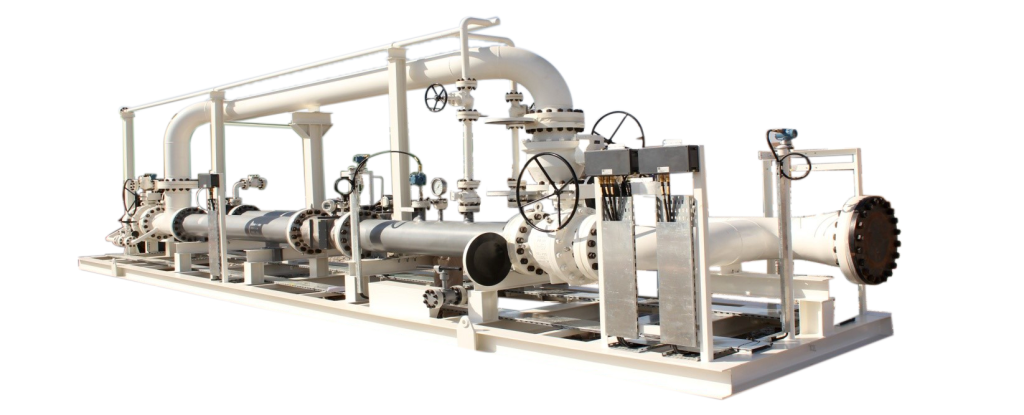
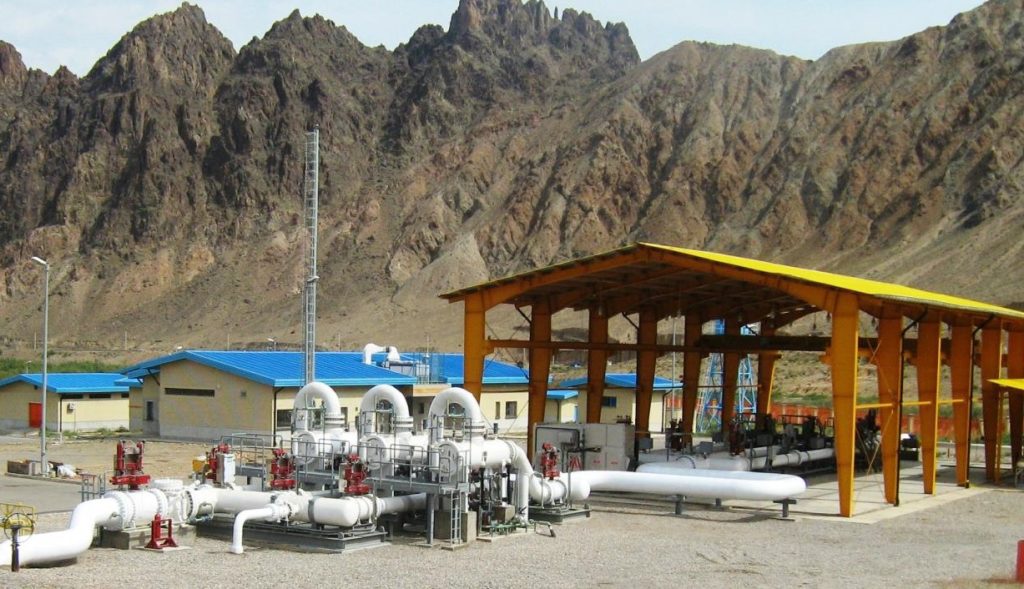
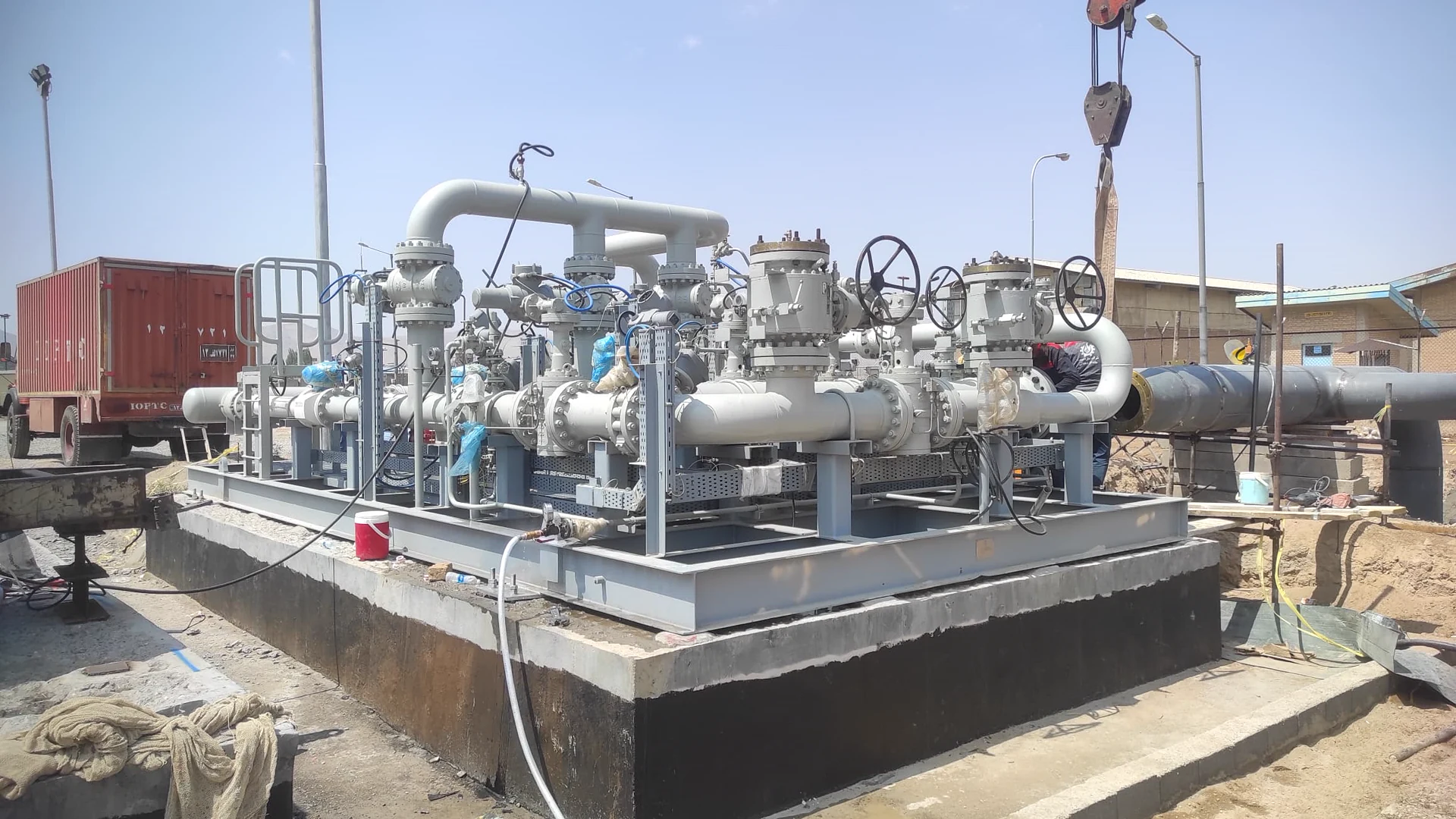
Gas metering skid with meter runs, valves and instrumentation

Technical capability

Metering Systems

Engineering, procurement, integration, testing and commissioning of gas and liquid measurement systems for refineries, export stations and process facilities.

What does SKP do in metering?

Sanat Khat va Palayesh (SKP) provides engineering, procurement, integration, testing and commissioning services for gas and liquid metering systems used in refinery, transmission and export applications. A metering system is delivered as an engineered package: meter runs, valves, instrumentation, flow computers, panels and cabling, and the associated control logic, all tested and handed over as one system.

SKP's documented experience includes the export gas metering stations to Turkey, Armenia and Iraq, the Shazand oil metering and proving skid, and the metering systems for the Ilam, Parsian, Shahid Hasheminejad and South Pars No. 10 gas refineries.

Technical scope

The systems SKP delivers

01

Custody transfer metering

Fiscal measurement systems that set the quantity on which two parties settle, and which have to stand up to inspection by both of them.

  • Export and border gas metering stations
  • Fiscal and allocation metering for liquids
  • Duty and standby meter run configuration
  • Proving and calibration requirements built into the design
02

Gas metering skids and stations

Gas measurement packages built on orifice, ultrasonic and venturi technologies, with pressure regulation and the in-line equipment the meter depends on.

  • Orifice, ultrasonic and venturi meters
  • Pressure regulation and protective streams
  • Filtration, heating and flow-conditioning equipment
  • Skid structure, piping and workshop fabrication
03

Liquid metering and proving

Measurement systems for crude oil and process liquids, with the means of proving meter accuracy in place.

  • Turbine, positive displacement, Coriolis and ultrasonic meters
  • Prover systems and meter proving
  • Loading and unloading systems
  • Air elimination and fluid conditioning equipment
04

Flow computers and metering control

The calculation, recording and supervisory layer that turns a meter output into a record somebody can rely on.

  • Flow computers and corrected flow calculation
  • Metering supervisory and reporting systems
  • Control panels, power distribution and instrument cabling
  • Communication configuration and data transfer to upstream systems
05

Package instrumentation and sampling

The pressure, temperature and quality measurements the accuracy of the whole system rests on.

  • Pressure and temperature transmitters
  • In-line sample probes and take-off systems
  • Instrument valves and manifolds
  • Interfaces to analyzer systems for quality correction
06

Integration, testing and commissioning

Turning a set of equipment into a proven system before it reaches site.

  • Workshop skid fabrication and integration
  • Factory acceptance testing against the approved inspection and test plan
  • Installation, loop checking and site acceptance testing
  • Commissioning, operator training and documentation

Inside the package

Anatomy of a metering skid

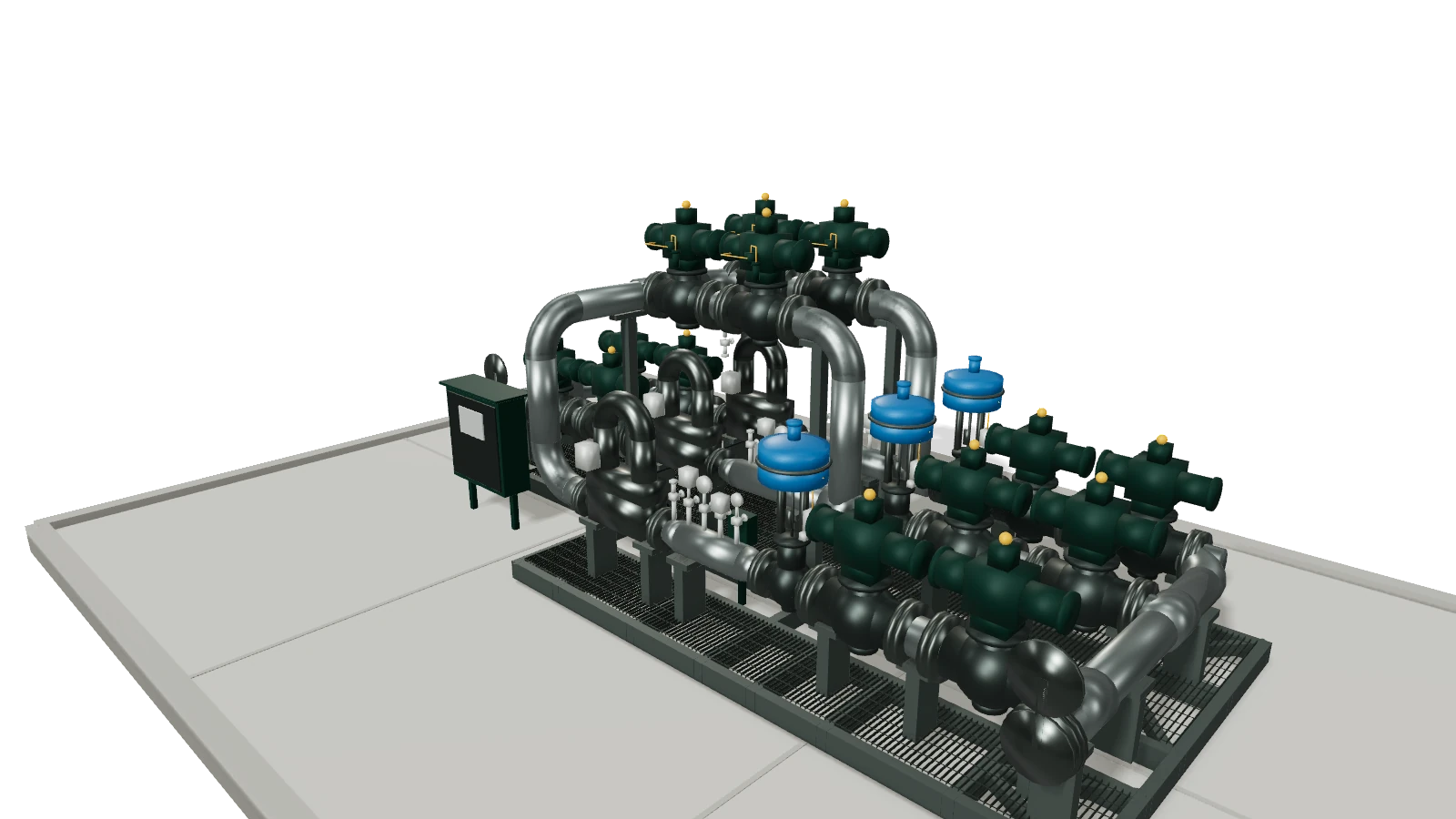
Rotate and inspect an interactive 3D model of the ethane metering skid SKP is engineering for Jam Petrochemical Company, built from the project's own general-arrangement drawings: three Coriolis metering runs on one frame — duty, standby and master — with the crossover that puts the master meter in series to prove the stream in service. Follow the gas through it, or pull the package apart into the disciplines that build it.

Read the project record
Interactive 3D model of an ethane metering skid with three Coriolis metering runs and a proving crossover

Drag to orbit, scroll to zoom. Choose a number to fly to that equipment.

Equipment

Disciplines

  • Civil, Structural & Architectural
  • Piping
  • Instrumentation & Control
  • Electrical

Modelled from SKP's own general-arrangement engineering for this skid and simplified for the web. Arrangement and proportions only — no drawing, tag or process data is reproduced here.

Operating principle

How a metering skid works

The path a stream takes from inlet to outlet, and what is measured at each stage and why. This is the process view; the control-system view is the architecture drawing on the measurement solutions page.

Direction of flow

Inlet & isolation

On every skid

The stream enters through double block and bleed isolation. Two seats with a vent between them let the skid be positively isolated and proved leak-tight without breaking into the line, which is what makes maintenance and proving possible while the pipeline stays in service.

  • Inlet block valve, double block and bleed
  • Bleed and vent connection
  • Local pressure indication

No skid carries every stage. Conditioning, proving and sampling are added when the meter technology, the fluid and the contract call for them, and left out when they do not. The order above is the sequence a stream passes through; which stages are present, and what sits in them, is a design decision taken per application.

Every stage, in text
  1. Inlet & isolation

    On every skid

    The stream enters through double block and bleed isolation. Two seats with a vent between them let the skid be positively isolated and proved leak-tight without breaking into the line, which is what makes maintenance and proving possible while the pipeline stays in service.

    Instruments: Inlet block valve, double block and bleed · Bleed and vent connection · Local pressure indication

  2. Filtration & flow conditioning

    Depends on the meter type

    How much conditioning a stream needs is set by the primary element, not by habit. An ultrasonic or orifice gas meter is calibrated on a fully developed, swirl-free profile and needs a filter, a flow conditioner and defined straight lengths upstream and down; deliver anything else and it reads consistently, but wrong. A Coriolis meter is not profile-sensitive in the same way and needs far less, though liquid duty still wants strainers and air elimination. The arrangement follows the meter.

    Instruments: Filter separator on gas · basket strainer and air eliminator on liquid · Flow conditioner · Upstream and downstream straight lengths · Differential pressure across the filter

  3. Flow measurement

    On every skid

    The primary element measures the flowing stream. Which one depends on the service: multi-path ultrasonic or orifice on gas, Coriolis on liquid where mass is the quantity that matters. Runs are arranged in parallel so one can be taken out for proving or maintenance while the others carry the duty.

    Instruments: Ultrasonic meter, multi-chord · Orifice plate and differential pressure transmitter · Coriolis mass meter · Meter run isolation

  4. Pressure & temperature

    On every skid, but not the same instruments

    Flow is measured at line conditions and settled at reference conditions, so the correction has to be measured too. A gas run takes pressure and temperature at the meter. A Coriolis meter already reports mass and density directly, so it needs no pressure correction for quantity — temperature still matters, and a densitometer appears where volume at reference conditions is what the contract asks for.

    Instruments: Pressure transmitter at the meter · Temperature transmitter, RTD in a thermowell · Densitometer on liquid duty

  5. Sampling & analysis

    Depends on the service

    Quantity alone does not settle a custody transfer — composition does. A take-off on the same stream feeds a gas chromatograph or an automatic sampler, so the heating value, or the water and sediment content, belongs to the flow actually measured.

    Instruments: Sample probe in the metering run · Gas chromatograph · Automatic sampler and receiver

  6. Proving

    Depends on the application

    A meter is only as good as its last proof. A master meter or prover loop compares the working meter against a reference under the same conditions, and the resulting meter factor is applied by the flow computer. This is the branch that turns a measurement into a defensible one.

    Instruments: Master meter run · Prover connections and four-way valve · Meter factor applied at the flow computer

  7. Flow computer & supervisory

    On every skid

    The flow computer takes the primary signal together with pressure, temperature and composition, computes corrected volume and mass, and totalises continuously. Calculations follow AGA, API MPMS and ISO; pulse integrity checking makes a lost or spurious pulse detectable rather than silent.

    Instruments: Flow computer per run · Supervisory station and reporting · Dual-pulse integrity to API MPMS Ch. 5.5

  8. Control & outlet

    Depends on the duty

    A control valve holds the operating point — flow rate, or back pressure high enough to keep the stream single phase across the meter — and outlet isolation returns the stream to the line. Control sits downstream so its turbulence is never in front of the measurement.

    Instruments: Flow or pressure control valve · Outlet block valve · Non-return protection where the duty needs it

How the meters work

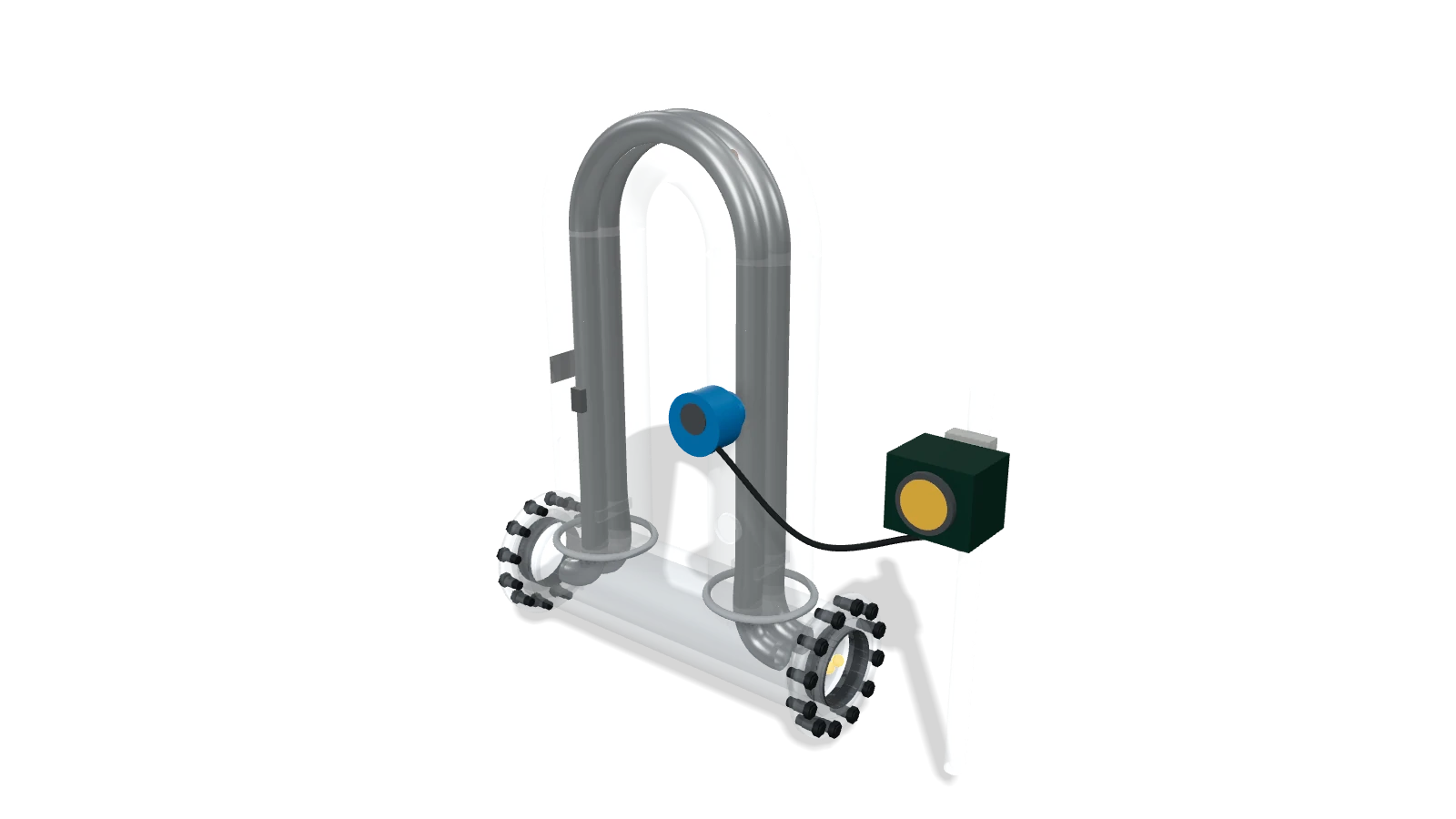
Interactive 3D models showing two of the measurement principles behind our gas and liquid metering systems. Drag to rotate, and use See inside to look past the case.

Coriolis mass flow meter

Interactive 3D model of a Coriolis mass flow meter with twin bent measuring tubes

Loading model

Fluid is divided between two tubes that are vibrated in opposition. Mass passing through twists them out of phase, and that twist is the measurement: mass directly, with density read from the resonant frequency of the same tubes.

Reference projects

SKP metering projects

The projects below are SKP's documented experience in gas and liquid measurement systems.

Iran–Armenia export gas metering station
Metering2007

Norduz Export Gas Station

EPC delivery of an export-gas metering station near the Aras River, including the main station and a temporary metering facility.

Read More
Shazand oil metering and proving skid set on its plinth at the Shazand Oil Transfer Center
Metering2024

Shazand Project

Completion, refurbishment, and commissioning of the metering, proving, and automatic sampling systems at the Shazand Oil Transfer Center, including equipment calibration, control system modifications, workshop and site testing, and final handover.

Read More
All projects

Frequently asked questions

What is a custody transfer metering system?
It is a measurement system, also called fiscal metering, that establishes how much gas or liquid has passed between two parties, to an accuracy good enough to settle on. Because its output becomes an invoice, the system has to be inspectable, calibratable and provable.
Does SKP provide gas metering systems?
Yes. SKP engineers, supplies, integrates, tests, installs and commissions gas metering systems, from border export stations to measurement systems inside gas refineries.
What services does SKP provide on a metering project?
Depending on the contract: basic and detailed engineering, equipment procurement, skid fabrication and integration, inspection and testing to an approved ITP, site installation, commissioning and handover to the operator.
Does SKP have experience with Iranian gas refineries?
Yes. Metering systems for the Ilam, Parsian, Shahid Hasheminejad and South Pars No. 10 gas refineries are in progress, and the Shazand oil metering and proving skid has been delivered.
How does a gas metering skid work?
Gas enters through an inlet header and is split between parallel metering runs — typically a duty run, a standby run and a master meter. Each run carries isolation valves, a flow conditioner, the meter and its pressure and temperature transmitters. The flow computer converts the meter's output to volume and mass at base conditions and, with the live composition from the analyzers, to energy. A proving crossover puts the master meter in series with a duty run to verify it in service. The 3D skid on this page shows the arrangement and the flow path.
How is the energy content of delivered gas settled?
By combining quantity and quality: the metered volume or mass from the skid, multiplied by the heating value calculated from the gas chromatograph's composition. Both are measured continuously and time-stamped by the flow computer, so the energy delivered over a period, and whether the gas met its specification while it passed, come from one record.


Talk to us about a specific metering system

Get in touch for a technical enquiry, a tender, or a review of the scope of a measurement package.

Contact SKP